Technologies > Content Management > Jekyll Usage statistics and market share of JekyllRequest an extensive Jekyll market report.Learn moreThese diagrams show the usage statistics of Jekyll as content management system on the web. See technologies overview for explanations on the methodologies used in the surveys. Our reports are updated daily. Jekyll is used by 0.1% of all the websites whose content management system we know. This is less than 0.1% of all websites. Versions of JekyllThis diagram shows the percentages of websites using various versions of Jekyll. How to read the diagram:
Version 3 is used by 57.4% of all the websites who use Jekyll. | Version 3 | |
|---|
| Version 4 | |
|---|
| W3Techs.com, 16 October 2026 |
|---|
| Percentages of websites using various versions of Jekyll |
Historical trendThis diagram shows the historical trend in the percentage of websites using Jekyll.
Our dedicated trend survey shows more content management usage and market share trends.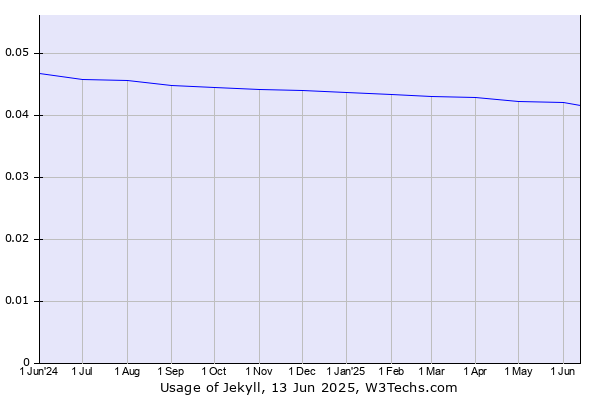 You can find growth rates of Jekyll compared to all other content management systems in our Jekyll market report. Market positionThis diagram shows the market position of Jekyll in terms of popularity and traffic compared to the most popular content management systems.
Our dedicated market survey shows more content management market data. 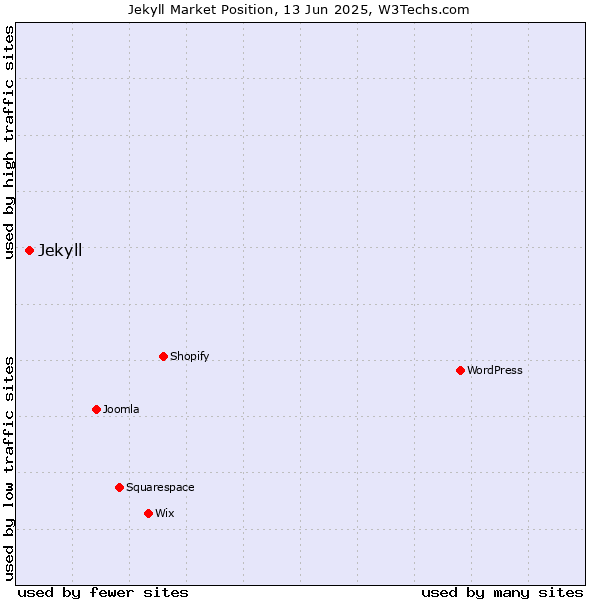
Popular sites using JekyllRandom selection of sites using JekyllSites using Jekyll only recentlyMore examples of sitesYou can find more examples of sites using Jekyll in our Jekyll market report, or you can request a custom web technology market report. Free technology usage monitoring serviceGet a notification when a top site starts using Jekyll. Share this page | 



 LinkedIn
 Mastodon
 Bluesky